Hacker News
What objective is reasoning solving?
derefr
|next
[-]
Reasoning (i.e. bubbling those remembered words up into your mental context, and then using a special "trigger effectively arbitrary synaptic activations dependent on the content of the attention-masked context and an ongoing state" bridging reflex on them, a.k.a. "system-2 thinking") is how you leverage memories-of-words into useful behavior. Rather than executing native skills embedded into your synaptic weights, you're running a single very fancy native skill that acts as an interpreter for word-memory data, slowly and strenuously turning words you're holding in mind into more words (synthesis), or into associations to other memories (word-memories or otherwise), or into actions/outputs, etc.
(An especially useful "trick" of this system is planning, i.e. chaining the interpreter through "mere words" that conjure more "mere words" to mind until you end up at words that form a declaration of what you're about to do. You can then rely on a special part of the bridging reflex, namely the "instruction-following" reflex, to react in a way where your actions are constrained by the plan you've generated.)
fedpost
|root
|parent
|next
[-]
bwestergard
|root
|parent
|previous
[-]
"RL training directly raises the success probability , by spending a lot of compute on searching for successful paths and then training the model to reproduce them. The gains we credit to “thinking longer” come from the search we paid for during training, rather than at inference."
vova_hn2
|next
|previous
[-]
P. S. The animated bird is truly magical!
HarHarVeryFunny
|root
|parent
[-]
vova_hn2
|root
|parent
[-]
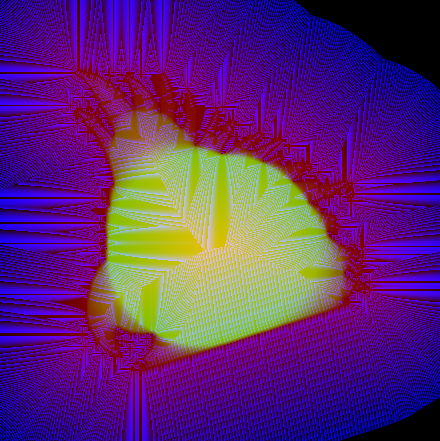
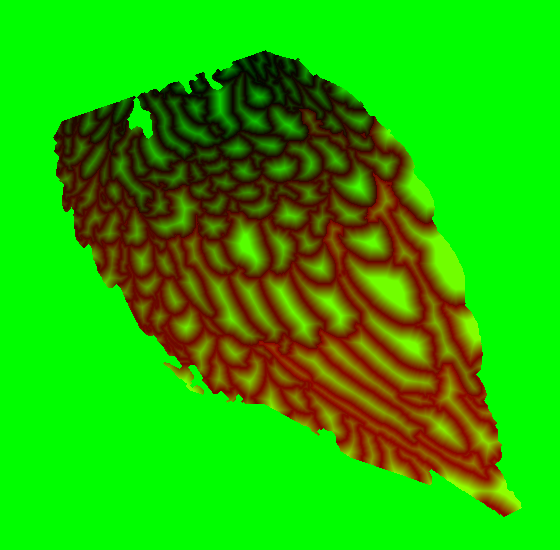
For example, what is this [0] or this [1].
The code is not obfuscated and seems well documented [2]. Maybe, I'll read it later or have an agent explain it to me.
[0] https://alexwang.ai/images/kea/head-fill.webp
piker
|next
|previous
[-]
Watching my son work through difficult math problems has forced me into this realization. In my head there is one "correct" path, and I often have to stop myself from interrupting his chain of thought. He often is just getting there a different way.
dogscatstrees
|next
|previous
[-]
avereveard
|next
|previous
[-]
niemandhier
|next
|previous
[-]
I am not sure I support his statement about RL “searching for successful paths and then training the model to reproduce them”.
Don’t we train the model to use a certain method to explore the space in search for an answer?
As soon as you have tool calling and a way to verify your result, such as a theorem prover for example you are essentially running an optimization algorithm.
jebarker
|root
|parent
[-]
Not really - you just sample random high-probability completions and then the verifier tells you which ones to nudge the model towards and which to nudge away from. There's lots of clever ways you could improve the search process, but standard practice right now is just random sampling.
akavi
|next
|previous
[-]
1) Pretraining creates a bias _towards_ "correct answers" with each inference step
2) A longer walk is more likely to land in the correct region, given it's easier to verify you have the correct answer than to create it
3) RL selects the subset of walks that lands in the correct region and tilts the distribution in favor of such walks
4) By 2, that trains towards longer walks
...Is that correct?
EDIT: Wait, but this contradicts the post's claim that "The gains we credit to “thinking longer” come from the search we paid for during training, rather than at inference.". This requires that thinking longer is not at all causal for correct answers, which contradicts 2.
jebarker
|root
|parent
[-]
trinari
|root
|parent
[-]
jebarker
|root
|parent
[-]
NickNaraghi
|next
|previous
[-]
Sounds like it's hillclimbing all the way down!
Cool framing. I'm excited for the parallel construction of ___ as pathfinding through weight space.